
Content
Permanent residency in Portugal is a status that grants its holder the right to reside in the country without time limits. To move to Portugal for permanent residency, an applicant must first obtain a visa, then receive a residence permit (temporary residency), and reside in the country continuously for 5 years. Immigration is possible on the basis of employment, education, entrepreneurship, investment, family reunification, humanitarian, or other legal grounds.
Residents of Portugal enjoy the benefits of living in a country ranked 20th in the world for quality of life (according to independent ranking by Numbeo) and gain nearly all the same privileges as Portuguese citizens—except the right to vote or hold certain government positions.
This article covers the key aspects of relocating to Portugal for Permanent Residency: timelines, costs, immigrant reviews, and legal nuances.
Why Relocate to Portugal?
Moving to Portugal for permanent residency is an ideal option for foreign nationals who wish to live in a financially stable EU country with clean air, high salaries, and quality healthcare. Immigration is also a smart move for those planning to launch a business on the EU market, get a top-tier education, or build a career with long-term growth prospects.
Portugal’s individual quality of life index is 166.89 points, which is rated as «very high». This index takes into account climate, safety, healthcare, and the ratio of living costs to average wages.
Key Benefits of Portuguese Permanent Residency
- Unlimited residence in Portugal without the need for regular visits to immigration authorities.
- Visa-free travel throughout the European Union and Schengen Area.
- The right to engage in employment or self-employment.
- Access to healthcare services on the same terms as Portuguese citizens.
- Access to education, including for minor children immigrating with the applicant.
- Eligibility for social security and tax benefits.
- The ability to reunite with family members and apply for their residence permits (temporary or permanent).
- A clear pathway to Portuguese citizenship and an EU passport.
Find out if you’re eligible for an EU passport and how long the process will take — at a free consultation with a migration law expert.

Who Can Obtain Permanent Residency in Portugal
Foreign nationals may move to Portugal for permanent residency (i.e., obtain the status of a permanent resident) if they have legally resided in the country for at least five years with a valid temporary residence permit at the time of application.
To qualify for permanent residency, the applicant must meet the following criteria:
- sufficient financial means (minimum monthly income in 2023 — €760);
- compliance with tax obligations;
- basic knowledge of the Portuguese language;
- proof of permanent accommodation (owned or rented property in Portugal);
- no criminal record (including in the applicant’s home country);
- a complete set of supporting documents based on the grounds for immigration.
Relocating to Portugal for Permanent Residency requires legalization of status under one of the available immigration categories, language acquisition, and continuous residence in the country.
Migration specialists can help identify more accessible EU immigration programs, with full details available during a free consultation.
Ways to Immigrate to Portugal
Emigration from any non-EU country to Portugal is possible on the following legal grounds:
Employment
A residence permit can be granted to immigrants who secure a job with a local company or are transferred to a Portuguese branch of an international organization. The field of work is not restricted by law.
Education
Relocation to Portugal is available for students enrolled in Portuguese universities, including participants in international exchange programs. Applicants must pay the full tuition fee upfront to qualify for a residence permit.
Business Activity
Foreign nationals intending to launch a startup in Portugal may relocate if their project is approved by a licensed business incubator. The business agreement serves as proof for granting residency status.
Investment
Emigration to Portugal is open to individuals planning to invest in the local economy. The investment amount ranges from €250,000 to €1,500,000, depending on the target asset. Purchasing real estate within this price range also qualifies for a residence permit.
Family Reunification
Residency may be granted to spouses and unmarried minor children of Portuguese citizens or legal residents (holders of residence or permanent residency permits). Other relatives may also qualify under special circumstances—such as disability or dependency.
Humanitarian Grounds
Individuals who require protection from the Portuguese state, such as recognized victims of human trafficking or official refugees, may apply for permanent residency. In such cases, the issuance of a residence permit is tied to a police investigation, and each case is evaluated individually.
Financial Independence
Immigration is available to foreign nationals who receive a steady income from overseas companies or as passive dividends. The minimum monthly income required is €760 (Portugal’s minimum subsistence level for 2023).
Other Grounds
Portugal also accepts applicants under special immigration categories, including licensed volunteers, interns, international talents, religious workers, and research professionals. The applicant must provide documentation confirming their planned activities.
To discover new opportunities with EU citizenship
How to Move to Portugal for Permanent Residency
To relocate to Portugal for permanent residency, a foreign national must first obtain a visa, then apply for a temporary residence permit, and subsequently reside in the country for five years.
The most practical options for acquiring Portuguese Permanent Residency usually include investment, launching a startup, or official employment. Portugal also grants residency status through real estate purchases, and the owner retains full rights to use or dispose of the property.
Consequences of Illegal Stay
Illegal immigrants in Portugal may face fines, forced deportation, and entry bans into the country and other EU or Schengen states.
Penalties also apply to individuals involved in facilitating illegal border crossings—such offenses may result in imprisonment from 1 to 8 years, depending on the severity of the crime.
Experienced immigration lawyers can recommend the best legal and expedited pathways for moving to the EU. International law specialists provide a tailored approach to each client and help select the most effective strategy for obtaining a residence permit, permanent residency, or second citizenship.
Steps to Obtain Permanent Residency in Portugal
Relocating to Portugal for Permanent Residency from non-EU country typically involves the following steps:
- Obtaining a visa that allows for residence permit application (valid for up to 4 months).
- Relocating to Portugal and submitting documents to the Immigration and Borders Service (SEF – Serviço de Estrangeiros e Fronteiras).
- Receiving a residence permit and residing legally in the country for the required period.
- Renewing the residence permit, if applicable and based on continued eligibility.
- Applying for permanent residency after 5 years of continuous legal residence.
How Much Does Relocating to Portugal Cost?
According to testimonials from individuals who have moved to Portugal for permanent residency, immigration and legalization involve significant expenses. Applicants must purchase transportation tickets, rent or buy property in the country, cover their living expenses for five years before applying for Permanent Residency status, and pay government fees at each stage of the process. Below is a table outlining basic documentation costs as of 2024.
| Expense Item | Cost (€) |
|---|---|
| Residence Visa | 90 |
| Residence Permit Application | 85 |
| Residence Permit and Renewal | from 73 (varies by basis) |
| Permanent Residency (Permanent Residency) Application | 108 |
| Notary and Translation Services | from 12 per page |
Immigration-related expenses leading up to permanent residency also include the cost of proving legal grounds—such as investments or capital contributions to a business.
A more affordable and faster pathway to EU legalization can often be identified with the help of international law specialists.

How to Choose a Portuguese City for Relocation
Immigrants who relocate to Portugal most often choose the following cities for permanent residence:
Lisbon
The capital of Portugal is a large city with a population of over half a million, located on the western edge of the Iberian Peninsula. Lisbon is among the major economic hubs of Europe, with a growing financial sector and one of the main container ports on the Atlantic coast.
There is high demand for both skilled and low-skilled jobs, including general laborers, heavy vehicle drivers, repair and logistics workers, as well as professionals in hospitality, tourism, and entertainment.
Estimated monthly living expenses (excluding rent): ~€697
Average net salary: €1,117
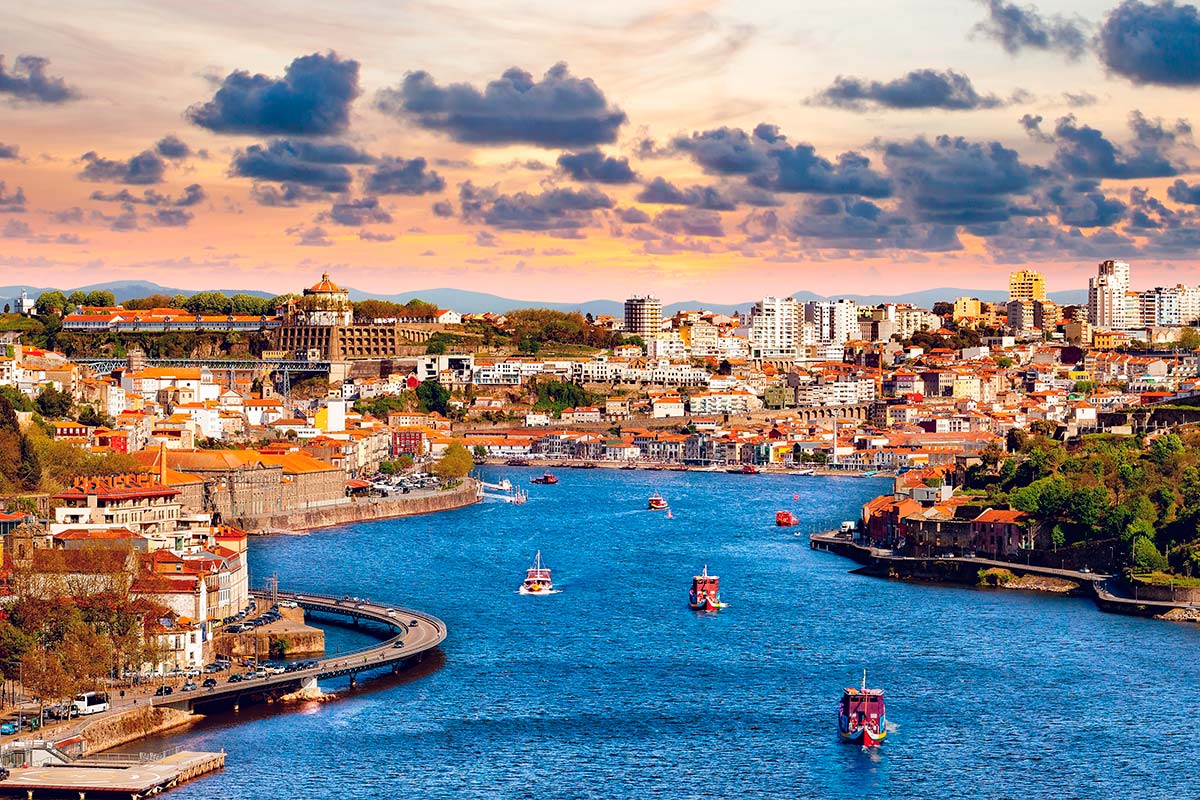
Porto
Portugal’s second-largest city, located in the northern region of the country. Porto is listed among the Global Cities (GaWC) and is known for its developed economy and extensive industrial capacity.
Many immigrants work in oil refineries, stock and futures exchanges, publishing, and the maritime sector.
Estimated monthly living expenses (excluding rent): ~€624
Average net salary: €1,275
Coimbra
Portugal’s premier university town, renowned for the University of Coimbra, one of the most prestigious in Europe.
The city attracts students, professors, and others involved in education — with over one-third of the population linked to academic institutions.
Estimated monthly living expenses (excluding rent): ~€587
Average net salary: €940
Cascais
A small coastal city located on the Atlantic coast in western Portugal. Cascais is a popular tourist destination, historically known as the summer residence of the Portuguese royal family.
The city has a well-developed hotel and restaurant industry, along with employment opportunities in fishing and shipbuilding.
Estimated monthly living expenses: ~€670
Average net salary: ~€1,200
Life in Portugal: Testimonials from Immigrants
Reviews from individuals who have chosen to relocate to Portugal for permanent residency are generally positive. Immigrants note the friendliness of the local population and the variety of legal immigration pathways available. Long-term residents highlight the favorable balance between salaries and basic expenses, a decent selection of real estate options, and the availability of familiar food products in local stores.
Immigrants in Portugal appreciate the warm climate, proximity to the Atlantic Ocean, mostly sunny weather, clean air, and the abundance of architectural and cultural landmarks.
Among the drawbacks, many mention the Portuguese language, which must be learned to qualify for well-paying jobs and to feel fully comfortable in the country.
Some immigrant parents express mixed opinions about the quality of education in schools and universities. Admission to Portuguese universities is often considered challenging due to high competition.
Immigration Assistance for Residents of Turkey and Other Countries
Individuals wishing to relocate from Turkey or any other country to an EU member state can seek help from immigration lawyers. Experts in international law analyze each client’s case and recommend the best legalization programs across various countries, clearly outlining the advantages and disadvantages of each option and answering questions about family immigration.
A dedicated attorney supports the applicant throughout every stage of the application process, helping to minimize the risk of rejection and secure the necessary documents quickly.
Content