

Content
Permanent residency in Portugal can be obtained on various grounds, including financial self-sufficiency, employment, education, real estate acquisition, starting a business, investment activities, marriage, family reunification, retirement programs, as well as for long-term medical treatment or asylum. The standard legalization process includes obtaining a visa, applying for a residence permit (residency), and, after five years of legal stay, applying for permanent residency (PR) in Portugal. One year later — after a total of six years in the country — it is possible to apply for a national passport.
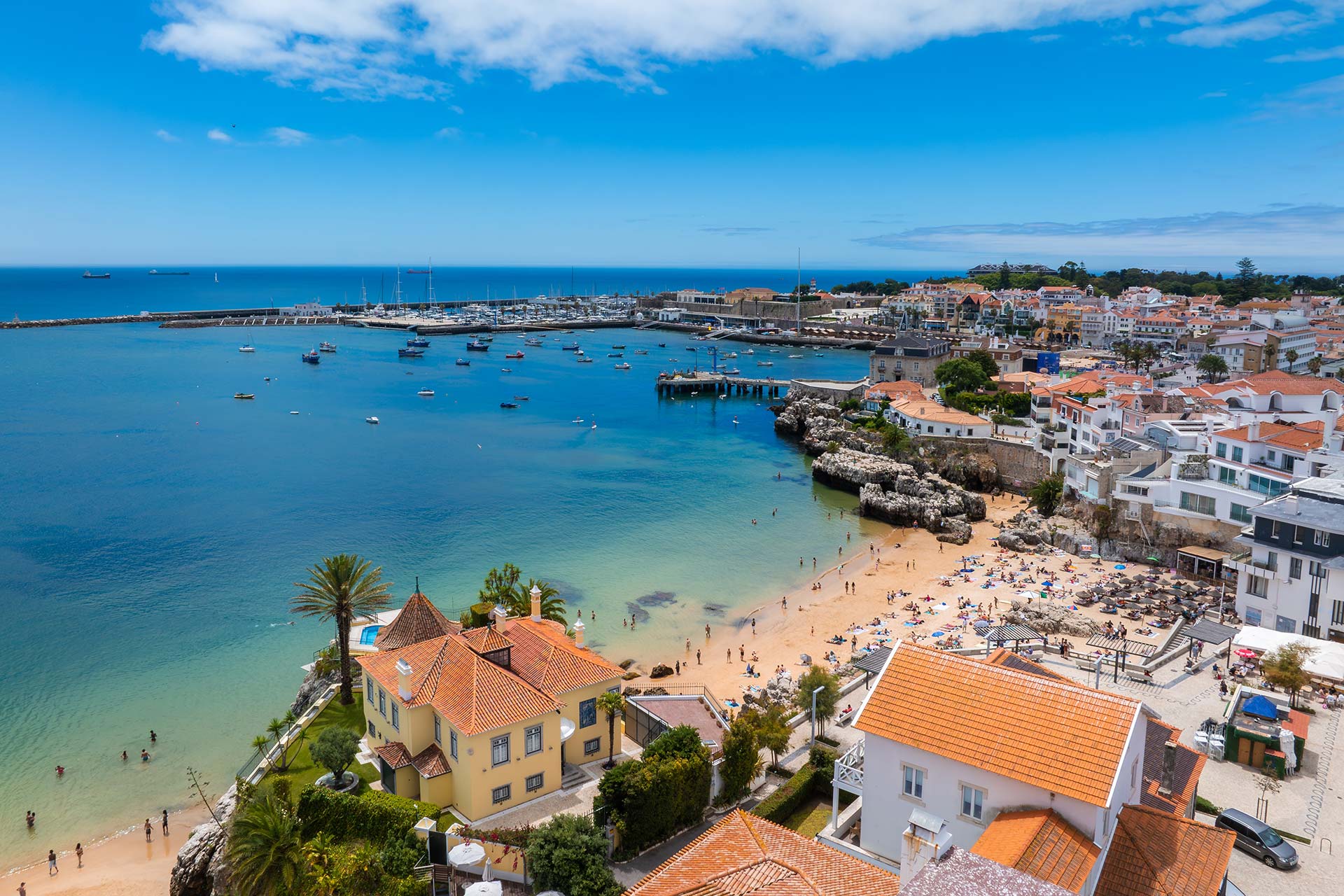
Portugal attracts foreigners with its warm climate, affordable real estate, and accessible legalization pathways. The relocation of skilled professionals, investors, and entrepreneurs for permanent residency contributes to the country’s economic development. Immigrants from around the world strive to acquire Portuguese citizenship — and with it, EU citizenship status.
Why Portugal Is a Good Option for Emigration
According to official data from 2021, the population of the Portuguese Republic was 10,344,800. The SEF statistical portal reported that 698,887 foreign nationals were registered in the country — nearly 7% of the population — highlighting the popularity of immigration to Portugal.
Citizens of former Soviet countries (CIS) are drawn to the country’s pleasant climate and the large Russian-speaking community, especially in major cities. The Portuguese government offers legal immigration pathways through accessible programs.
Life in Portugal offers many advantages:
- High level of safety: ranked 4th in the Global Peace Index (2021);
- Quality healthcare services;
- Widespread use of English, especially in business;
- Clean and eco-friendly natural environment;
- Friendly attitude of locals toward foreigners;
- Variety and quality of food products;
- Relatively low real estate prices compared to other EU countries;
- Affordable education in both public and private universities.
However, there are also a few drawbacks to living in Portugal. Chief among them are lower average wages compared to Spain, Germany, the United Kingdom, and other European countries. A characteristic trait of the Portuguese lifestyle is a slower, more relaxed pace of life — which some foreigners may view as a disadvantage, particularly in the business world.
How to Move to Portugal for Permanent Residency
In 2025, Portugal offers several legal pathways for foreign nationals to immigrate. Each route involves meeting specific requirements in addition to the general criteria for applicants. One of the key stages of legalization is a thorough assessment of the grounds for obtaining permanent residency (PR). Migration lawyers can help identify the most suitable immigration options — taking into account all the candidate’s circumstances to recommend the optimal residency program and, eventually, a pathway to Portuguese citizenship.
Defining the Purpose of Relocation
At the beginning of the immigration process, it is important for the applicant to clearly define the purpose of their stay in Portugal: whether it is for temporary residence, permanent residency, or obtaining EU citizenship.
If the goal is to acquire a passport, it is essential to understand the main steps of the legalization process, monitor the deadlines for residency renewals, and strictly comply with all legal obligations. For example, one must notify the SEF (Immigration and Borders Service) about any changes in employment, address, or marital status. Neglecting residence permit procedures or overstaying may negatively impact the approval of a PR application or the issuance of a Portuguese passport.
Obtaining a Visa
To enter Portugal with the intention of applying for a residence permit, a national visa is required. Exemptions apply to certain categories, including scholarship recipients, researchers, investors, patients and their accompanying persons, as well as family members participating in the reunification program.
All other applicants must submit the appropriate request at the nearest Portuguese consulate, along with the following documents:
- a valid international passport;
- two passport-sized photos;
- health insurance policy;
- police clearance certificate;
- proof of sufficient financial means to stay in Portugal (bank statement);
- flight reservation;
- proof of accommodation (rental agreement, hotel booking, or property ownership certificate).
Depending on the grounds for immigration: an employment contract, university enrollment confirmation, business registration document, birth or marriage certificates, or proof of investment.
Visa authorizations are reviewed and issued for different durations. Depending on the grounds for application, the applicant must apply for one of the following visa types:
Schengen Visa:
- Validity period: 90 days;
- Processing time: 5–7 days;
- Consular fee: EUR 80, or EUR 35 at a reduced rate*.
Temporary Stay Visa:
- Validity period: up to 12 months;
- Processing time: 30 days;
- Consular fee: EUR 75.
Residence Visa:
- Validity period: from 1 year;
- Processing time: 60 days;
- Consular fee: EUR 90.
*Applies to children aged 6–12, as well as citizens of Albania, Azerbaijan, Bosnia and Herzegovina, Georgia, North Macedonia, Moldova, Montenegro, Russia, Serbia, and Ukraine.
If a visa extension is required, the immigrant must contact SEF (Immigration and Borders Service): first by scheduling an appointment online, then by submitting the appropriate application and required documents in person. Applications submitted more than 30 days after the visa expiration date will not be accepted.
Relocation and Settlement
Before immigrating to Portugal, it is necessary to arrange accommodation — either temporary or permanent — and obtain health insurance. Without these documents, it is not possible to receive a visa or residence permit.
The applicant must also register with the Portuguese tax authority and obtain a personal tax identification number (NIF).
To discover new opportunities with EU citizenship
Obtaining a Residence Permit
Upon arrival in Portugal, the foreign national must register online with SEF and personally submit the application and document package for a residence permit.
The basic list of documents required to obtain a residence permit in Portugal includes:
- Two color passport-sized photos;
- International passport;
- Valid visa;
- Proof of sufficient financial means;
- Proof of accommodation;
- Authorization for SEF to conduct a criminal background check in Portugal;
- Proof of registration with the tax authority (NIF);
- Health insurance policy;
- Evidence supporting the basis for obtaining Portuguese residency;
- Marriage certificate (if applicable);
- Proof of registration with the social security system (if applicable).
Depending on the grounds for the application, government fees for processing range from €85 to €540.
In addition, fees for issuing the residence permit range from €225 to €5,392, with the highest amounts applicable to investors.
According to Article 75 of the «Foreigners Law», the initial residence permit is granted for a period of 2 years, with the possibility of renewal for an additional 3 years. Immigrants are required to reside in Portugal for at least 183 days per year. An exception is made for investors, who are only required to stay in the country for 7 days per year.
Obtaining Permanent Residency (PR)
After five years of legal residence in Portugal with a residence permit, an immigrant can apply to SEF for permanent residency. In addition to the standard set of documents required for a residence permit, applicants must submit a certificate of basic proficiency in the Portuguese language and copies of all previous residence permits. The processing time is around 60 days. PR is issued for 5 years and may be extended for the same period if the legal grounds for residency remain valid.
Application processing fee: €34 to €540
Cost of PR issuance: €225 to €7,548
(The maximum amount applies to investors.)
Applying for Citizenship
After 6 years of residence in Portugal, an immigrant may apply for a Portuguese passport. The citizenship application is submitted in person at the National Center for Immigrant Integration or at the local civil registry office, addressed to the Minister of Justice. The process is regulated by the «Lei da Nacionalidade» (Nationality Law) and the «Regulamento da Nacionalidade Portuguesa» (Portuguese Citizenship Regulation).
The application requires the same document set as for PR, including all previous residence permits. The processing time depends on the grounds for application and the applicant’s individual circumstances, typically taking around 12 months. Once citizenship is granted, the applicant can request a national ID card and Portuguese passport.
Legal Pathways for Immigration
A foreign national with no criminal record who provides proof of a legal basis for immigration may relocate to Portugal for permanent residency. Temporary residence can be obtained through real estate purchase, education, employment, financial self-sufficiency, and other grounds.
Purchasing high-value residential or commercial property provides the right to legally reside in the country. After obtaining PR, the investor may sell the property without losing resident status and proceed to apply for citizenship.
Studying at a Portuguese university allows one to obtain a student residence permit, which can be extended upon graduation through employment. Starting and running a business in Portugal — an EU member state — also allows immigrants to attract European investment.
Employment
One of the most popular ways to immigrate to Portugal is through official employment. This path is available to adults employed by local companies, freelancers, seasonal workers, intra-company transferees, and various other types of professionals.
To obtain a visa and temporary residence permit, the applicant must present a work contract and proof of registration with both the tax and social security authorities — first to the Portuguese consulate, and then to SEF.
A spouse, minor children, and dependent parents may join the foreign national who has obtained a residence permit through employment.
For highly qualified specialists, a special type of residence permit is available — the EU Blue Card, valid from 1 to 4 years. This permit entitles the holder to employment conditions and salary equivalent to EU nationals. The applicant must present a valid employment contract with a salary at least 1.5 times the national average (€1,753/month as of current rates) and, if required, proof of qualifications.
Education
Portuguese universities are renowned worldwide, and the comparatively affordable cost of education — especially when compared to other EU countries — attracts many international students. A visa and residence permit can be issued based on documents from an educational institution, such as a letter of admission, a contract, or a payment receipt. A student residence permit is issued for one year and can be extended for the same period.
A major advantage of temporary student residency in Portugal is the right to work, either as an employee or as a self-employed individual. Immigrants are required to inform SEF (Immigration and Borders Service) of any changes in their employment status and submit the relevant documentation.
Upon graduation, students are allowed to extend their residence permit for an additional 6 months to seek employment. After finding a job, they can apply for a new multi-year residence permit, and eventually qualify for permanent residency and Portuguese citizenship.
Real Estate
Foreign nationals can obtain a Portuguese Golden Visa valid for 2 years by purchasing real estate worth €500,000 or more. If the property is over 30 years old and purchased for renovation, the required investment drops to €350,000. However, Decree No. 14/2021 limits the right to purchase residential property in Lisbon and other major cities. Commercial properties remain available for investment in all regions of Portugal.
A Portuguese residence permit for property owners and their family members is granted based on proof of ownership and does not require a prior entry visa. Applicants can request temporary residency, renew it, and apply for PR online via the government portal ARI. The property owner becomes eligible to apply for Portuguese citizenship 6 years after acquiring the property.
Business
Foreign nationals looking to relocate to Portugal through business immigration may launch a startup, establish a company, or invest in an existing business within the country. Under Portuguese law, a residence permit can be obtained by fulfilling one of the following conditions:
- Approve a 5- or 10-year business plan through one of the country’s business incubators.
- Create 10 permanent jobs for Portuguese citizens.
- Invest at least €350,000 in a new or existing company, while simultaneously providing 5 jobs.
- Gain approval for an innovative startup project from a recognized Portuguese incubator.
Entrepreneurs who register a traditional company in Portugal can apply for residency on the basis of investment. Foreign nationals who create an innovative startup may apply through the Startup Visa program.
Business immigration grants the right to obtain a residence permit in Portugal, and after 6 years, citizenship not only for the applicant but also for their family members — including a spouse, minor children, and dependent parents.
Investments
The Portuguese residence permit for investors (Golden Visa) is granted based on investments starting from €250,000 and allows for the relocation of the entire family. Investments can be made in the following types of assets:
- Artistic works or cultural support, including the preservation or restoration of Portuguese cultural heritage — from €250,000.
- Units in investment or venture capital funds — from €350,000.
- Scientific research activities conducted by public or private institutions — from €350,000.
- General economic activity — from €1,000,000.
The chosen investment option must undergo mandatory verification via the official ARI government portal, which is also used to submit applications for the issuance and renewal of residence permits.
Investment immigration allows residents to maintain their status by staying in Portugal for just 7 days per year and become eligible for citizenship after 6 years.
Financial Independence
Foreign nationals with a stable income or sufficient funds in a bank account can apply for a Portuguese residence permit for financially independent individuals. To submit an application, proof of the required annual amount must be provided:
- For the main applicant — from €7,620;
- For each family member over 21 — from €3,600;
- For each minor child — from €2,160.
Proof of funds can be provided through bank statements, official income reports from business or property rentals, or pension payment records. Immigration to Portugal based on financial independence is available to the entire family.

Marriage
A foreign national who has entered into a legal marriage with a Portuguese citizen can apply for a residence permit on this basis. Minor children of the spouse applying for temporary residency may also obtain the right to stay. Marriage and birth certificates must be submitted. If these documents are issued outside Portugal, they must be apostilled, translated, and notarized.
Family Reunification
Temporary residence can be requested by family members and dependents of foreign nationals legally residing in Portugal — including spouses, children, legal guardians, and parents.
To obtain a residence permit through family reunification, the resident family member in Portugal must submit an application to SEF along with documents proving the family relationship. Proof of sufficient financial means must also be provided for each individual applying through this procedure.
Scientific Research
Foreign nationals who enter Portugal to carry out scientific research activities are eligible to apply for a residence permit on this basis. The temporary residence permit is issued for one year, and if the applicant is involved in a European Union or other international research program, the legalization period can be extended up to two years.
Foreign researchers affiliated with officially recognized research centers are exempt from submitting proof of financial means, accommodation, and tax registration but must prove their professional qualifications. To obtain a Portuguese residence permit, one of the following documents is required:
- employment contract;
- service agreement;
- confirmation of a research scholarship granted for scientific activities in Portugal.
Long-Term Medical Treatment
Foreign nationals who have received an official medical certificate in Portugal confirming the presence of a chronic illness — along with their accompanying persons — may apply for a residence permit valid for 2 years, with the possibility of renewal for another 3 years. Applicants in this category are not required to obtain a visa, provided they have no criminal record.
Refugee Status
Foreign nationals who are facing persecution in their home country may apply for refugee status in Portugal. The issuance of asylum within the EU is governed by the 1951 Geneva Convention, which outlines the primary reasons for granting asylum:
- Violation of human rights due to political, religious, or racial grounds;
- Threats to life due to armed conflict or natural disasters;
- Inability to obtain protection or return safely to the home country.
An asylum application must be submitted to SEF, along with any identification documents and evidence of persecution. The case is typically processed within 6 months, during which the applicant receives temporary residence.
The Portuguese Refugee Council (CPR) provides necessary assistance to asylum seekers from the time of arrival until their application is approved. Once granted, asylum provides a 5-year residence permit.
EU Citizenship
EU citizens who plan to stay in Portugal for more than 90 days must register with the local city council (Câmara Municipal) at their place of residence. Within 30 days after the initial 3-month stay, they must apply for a Certificate of Registration by presenting:
- A valid passport.
- A legal basis for their stay in Portugal:
- employment contract;
- university enrollment confirmation;
- bank statement proving sufficient financial means.
Illegal Stay
Residing in Portugal without a valid authorization (visa, residence permit, permanent residency, or EU citizenship), or failing to renew a temporary residence permit on time, is considered an administrative offense. The immigrant must pay a fine, depending on the duration of illegal stay:
- Less than 30 days: €80 to €160.
- 30–90 days: €160 to €320.
- 90–180 days: €320 to €500.
- Over 180 days: €500 to €700.
A foreign national who enters Portuguese territory through an uncontrolled border point and fails to notify the authorities within 3 days must pay a fine of €60 to €160.
What to Consider When Moving to Portugal
Cost of Living.
Average monthly expenses for one person amount to approximately €547. The starting price for renting a two-room apartment in Lisbon is €1,000–1,500. In cities farther from the capital, rental options can be found for €500–600 per month.
Income Sources.
The average salary in Portugal after taxes is around €973. The most in-demand job sectors for foreigners include engineering, information technology, finance, and tourism.
Quality of Life.
According to Numbeo’s global database, Portugal’s Quality of Life Index is 163.02, which is rated as very high. For comparison:
- France: 152.6
- Italy: 137.42
- Turkey: 120.21
- Russia: 102.67
Safety.
Portugal ranks among the top 5 safest countries in the world. This rating considers the country’s economic development, low risk of natural disasters and armed conflict, low crime rate, and high levels of public trust in the police and government.
Economic Stability.
As a European Union member with strong foreign investment, Portugal maintains a stable position in the global market. According to the World Bank, Portugal’s GDP per capita in 2021 was $35,888.
Work and Business Opportunities.
New residents can benefit from the Non-Habitual Resident (NHR) tax regime. This special tax status is valid for 10 years (non-renewable) and allows eligible individuals to pay a flat income tax of 20%, regardless of income level. The standard income tax in Portugal can reach up to 48%.
Education System.
Portugal is known for its high-quality education in both schools and universities. Programs are mainly offered in Portuguese and English. Degrees from Portuguese universities are internationally recognized and do not require additional certification.
Attitude Toward Immigrants.
The Portuguese are very welcoming to foreigners. CIS citizens relocating to Portugal can find Russian-speaking communities in nearly all major cities, making it easier to adapt. In Lisbon, children can attend Russian-language schools, and familiar products and goods are widely available.
Access to Quality Healthcare.
The healthcare system in Portugal is of a high standard. Residents have access to free public healthcare services through insurance, which also covers a range of services in private clinics.
Immigrant Reviews
The decision to move to Portugal for permanent residency is most often motivated by the desire to relocate to a warmer climate. Many immigrants — especially those with children — choose to settle along the coast or make frequent trips to the beach from nearby cities. Newcomers highlight the variety and affordability of seafood, as well as the laid-back local lifestyle. A key factor in favor of Portugal is its low crime rate.
According to reviews, the legalization process varies greatly depending on the grounds for relocation. Those with international work experience often find it easy to integrate into Portugal or relocate as financially independent individuals, continuing to work as freelancers. Starting a business tends to be a more complex and time-consuming process, and most entrepreneurs seek help from immigration specialists.
Residents from CIS countries report that Portuguese authorities issue documents and permits within the legal timeframes, allowing for precise planning of next steps.
Specialist Support for Relocation
Immigration programs in Portugal require strict adherence to each step of the legalization process and constant monitoring of permit issuance and renewal deadlines for future citizenship applications.
Foreign nationals planning to relocate should be aware of the need to have housing arranged, know the locations of the nearest government offices, and secure a translator if they do not speak Portuguese.
To simplify the immigration process and choose the most appropriate legalization pathway, it is advisable to consult with specialists in advance. This will help ensure a smoother and more organized transition to life in Portugal.
Content