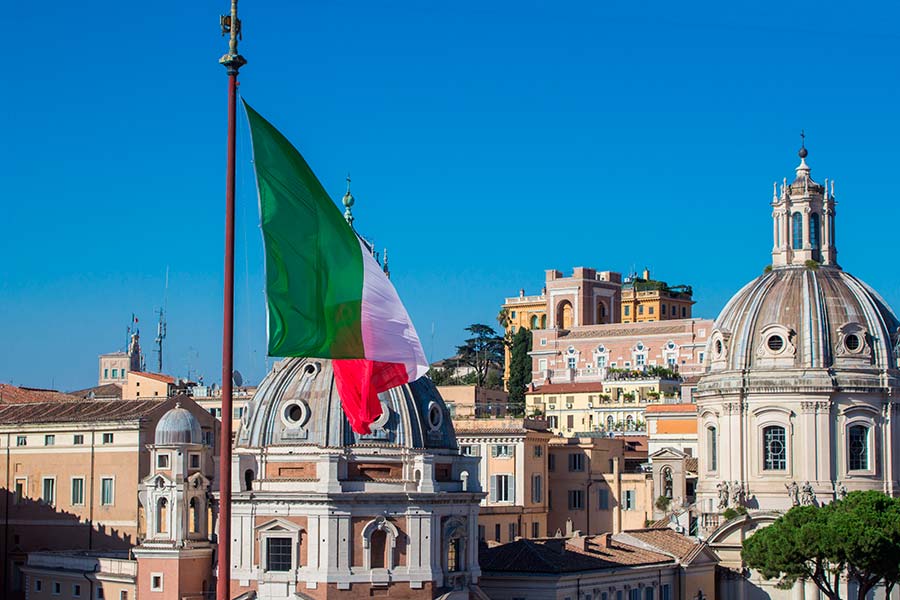
Permanent residence in Italy allows a foreign national to live continuously, move freely, and engage in employment or other legal activities within the country. Permanent residents enjoy nearly the same rights as citizens, except for holding public office and participating in elections.
To obtain permanent residence, non-EU nationals must live in Italy for more than five years, demonstrate financial stability, compliance with the law, and the absence of serious medical conditions. Legal grounds for immigration to Italy include education, employment, business activities, and others.
Obtaining permanent residence in Italy requires careful preparation and strict compliance with legal requirements. Migration lawyers can help applicants choose the most suitable pathway, properly prepare documents, and avoid common mistakes, significantly increasing the chances of a successful outcome.
Pros and Cons of Moving to Italy for Permanent Residence
Moving to Italy for permanent residence has its advantages and disadvantages. Immigration to this European country offers the following benefits:
- access to free healthcare in public institutions;
- the opportunity to work in a country with a relatively high average salary;
- access to high-quality banking services;
- the prospect of naturalization and obtaining a second citizenship in the future.
At the same time, in recent years the country has experienced economic instability, which may lead to difficulties in finding employment and maintaining a stable income.
Travel freely to over 170 countries
Ways to Immigrate to Italy
To obtain permanent residence in Italy, an immigrant must first apply for a residence permit, and after 5 years of temporary stay in the country — apply for permanent residence. After another 5 years of living in Italy with permanent status, a foreign national may apply for citizenship through naturalization. Permanent residence can be obtained through the following pathways:
- Education.
Foreign students receive a residence permit based on enrollment in universities, vocational institutions, or professional courses in Italy. The permit is issued by the local immigration office and is valid for 12 months, with the possibility of renewal if studies continue and financial stability is proven. During studies, students are allowed to work up to 20 hours per week. Graduates who wish to obtain permanent residence must convert their permit into a work- or business-based one, as a student permit alone does not qualify. After 5 years of residence and employment or business activity, they can apply for permanent residence. - Employment.
Immigrants working in Italy receive a residence permit based on an employment contract. Non-EU citizens are hired within annual quotas set by the government. A work permit is issued upon request of the employer through the Department for Civil Liberties and Immigration. Applications are considered only if no suitable candidates are found among Italian or EU citizens. Seasonal work permits are issued for 6–9 months, fixed-term contracts for one year, and indefinite contracts for two years. Permanent residence can be obtained after 5 years of employment. - Family Reunification.
Spouses, minor children, and dependent elderly parents of Italian residents can obtain a residence permit and later permanent residence after 5 years. The permit duration matches that of the sponsoring person. This type of permit can later be converted into a study or work permit. - Business.
Another option is starting a business in Italy. Foreign entrepreneurs can obtain a residence permit valid for two years. To apply, a business license is required. The permit is issued by immigration authorities, and permanent residence can be obtained after 5 years of residence. - Relocation with an EU Passport.
EU citizens can also obtain permanent residence after 5 years of living in Italy. However, unlike non-EU nationals, they do not need to apply for or renew a residence permit or obtain work authorization. They simply register at the local prefecture and enjoy the same social rights as Italian citizens. EU citizens may apply for permanent residence after meeting residency requirements or even for Italian citizenship after just 4 years of residence.
Citizens of Turkey can obtain an EU passport within about a year without residency requirements by taking advantage of repatriation programs in Romania, Poland, or Bulgaria. Specialists in international law can help assess the prospects of obtaining EU citizenship and assist with relocation.
How to Move to Italy for Permanent Residence
To simplify the relocation process to Italy, applicants may seek support from legal professionals. Specialists can help create an individual action plan and guide you through the following stages:
- choosing the grounds for relocation and preparing all necessary documents;
- obtaining a national type D visa at an Italian consulate, allowing legal entry for residence purposes;
- applying for a residence permit within one week after arrival in Italy;
- obtaining permanent residence after 5 years of legal stay as a temporary resident.
To move to Italy, applicants must meet immigration requirements, including:
- no criminal record;
- no threat to public order or national security;
- sufficient financial means (not lower than the minimum income level in the country);
- passing an Italian language test.
Document Preparation
The dossier required to obtain an initial residence permit includes:
- application form for a residence permit;
- original and copy of a passport with a valid visa;
- documents confirming legal grounds for relocation;
- four photos (3.5 × 4.5 cm);
- health insurance;
- criminal record certificate;
- proof of accommodation;
- receipt of payment of state fees;
- revenue stamp.
To apply for permanent residence, all of the above documents are required, along with additional ones:
- tax declaration for the last 12 months;
- copies of payment receipts for the last year (utilities, rent, etc.);
- certificate of Italian language proficiency (at least A2 level);
- proof of income for the last year;
- certificate of family composition.
All foreign documents must be translated into Italian by a certified translator and notarized. Legalization of documents is carried out through an apostille.
Obtaining Permanent Residence in Italy
The procedure for obtaining permanent residence in Italy includes the following steps:
- Preparation of documents. A foreign national who meets the required residency period gathers the necessary documents and passes a language test at an accredited institution.
- Application submission. The applicant submits the dossier to the local municipality (URP public relations office) or a post office and pays a state fee of approximately 32.
- Receiving the document. Migration authorities make a decision within approximately 30 days, after which the applicant can collect the residence permit.
Cost of Relocation
It is important to calculate the cost of moving to Italy in advance, as obtaining permanent residence involves several categories of expenses. It is not possible to purchase permanent status directly, so the budget is formed from visa, administrative, and living costs.
The cost of a long-term visa is approximately 120–130 EUR. Obtaining a residence permit typically costs between 100–200 EUR, including government fees and the issuance of the residence card. Applying for permanent residence remains relatively inexpensive — around 30–50 EUR, although additional administrative expenses may apply.
A significant portion of the budget is spent on relocation and living expenses. Flights to Italy usually cost between 250 EUR and 500 EUR depending on the season and destination. Rent starts at approximately 600–800 EUR per month in smaller cities and is significantly higher in large urban areas. Monthly living expenses amount to around 800–1,000 EUR, while food costs are approximately 300–500 EUR per person.
When relocating with a family, the total budget increases proportionally to the number of people. It is also important to consider additional costs such as language courses, children’s education, health insurance, and other individual needs.
Relocation Planning
When planning a move to Italy, it is important to consider the following organizational aspects:
- Housing search.
It is recommended to start the process of migrating to Italy by searching for housing. You can rent an apartment or house through real estate agencies or independently via specialized online platforms. Landlords may require proof of income, bank guarantees, or a guarantor who is a resident of the country. Rental costs depend on the region and property characteristics. On average, a one-bedroom apartment costs around 600–1,500 EUR per month, with significantly higher prices in major cities. Many properties are still rented unfurnished. Property purchase prices in Italy start at approximately 1,800–2,500 EUR per square meter in less popular regions and are considerably higher in tourist and business centers. Foreigners can obtain a mortgage, with average interest rates of around 4–5% per year. Utility costs typically range from 150–300 EUR per month, depending on the size of the property and the region. - Education for children.
Families planning to move to Italy should carefully consider educational arrangements for their children in advance. Preschool education is available from an early age — approximately from 3 months to 6 years, while children typically start school at around 5.5–6 years old. Secondary education is compulsory for all residents, regardless of the parents’ citizenship. Both public and private educational institutions operate in the country. The cost of preschool varies depending on the region and type of institution, averaging between 400-800 EUR per month. Public school education is free, although parents should account for additional expenses such as study materials and meals. Tuition at private schools ranges from approximately 8,000 EUR to 15,000 EUR per year, depending on the institution and program. - Employment opportunities.
When moving to Italy for permanent residence, many foreigners choose employment as their main pathway to legalization. The most in-demand sectors include domestic services, construction, agriculture, and seasonal work. In some cases, employers provide accommodation either free of charge or at a reduced cost. Salary levels depend on qualifications and region. For manual and low-skilled jobs, earnings typically range from 1,300-1,800 EUR per month. For highly qualified professionals, the most promising sectors include IT, engineering, finance, and healthcare. For example, banking professionals can earn on average between 3,500-5,000 EUR per month, and in some cases even more.
To ensure a smooth and comfortable relocation, it is important to address all immigration matters in advance. In particular, it is advisable to enroll in Italian language courses. You can start attending classes in your home country to make the integration process in Italy faster and easier.
Risks of Illegal Immigration
Compliance with Italy’s immigration laws is mandatory for all foreign nationals entering the country. Illegal immigration refers to staying in the country without valid documents or with forged or expired permits. Violations often occur when individuals enter Italy as tourists but engage in unauthorized employment. Working without the appropriate permit can lead to serious consequences.
If law enforcement authorities identify an illegal immigrant, they have the legal right to issue a deportation order along with a ban on re-entry into the country.

Top Regions and Cities in Italy for Living
Italy offers many places to live, each with its own advantages and characteristics. Here are some of the best regions and cities:
- Rome.
The capital is the largest city in Italy, offering wide opportunities for education, entertainment, and employment across various industries. Popular sectors include IT, construction, banking, and tourism. Many students come to study at institutions such as Sapienza University of Rome, the Pontifical University of Saint Thomas Aquinas, and the National Academy of Santa Cecilia. Rome also has a well-developed transport infrastructure. - Milan.
This is Italy’s economic and financial center, home to headquarters of major fashion companies such as Gucci, Fendi, and Campari. The city is known for its shopping, restaurants, and vibrant nightlife. Milan has a strong financial sector and active trade, while its suburbs host numerous industrial enterprises. - Florence.
Considered the cultural capital of Italy, Florence is famous for its museums and galleries. The city regularly hosts art exhibitions and festivals. It is ideal for those planning to work in tourism or open a restaurant. Florence also has developed engineering, light, and heavy industries, as well as agricultural production in the surrounding region. - Bologna.
A major center of culture and science, Bologna is also known for its food and light industries, including cheese production, winemaking, and pasta manufacturing. The city is home to the prestigious University of Bologna, attracting students from around the world. In-demand professions include engineers, skilled workers, and chefs. - Venice.
One of the most unique and visited cities in Italy, Venice attracts around 20 million tourists annually. Many foreigners work here in tourism and hospitality. Industrial areas include metallurgy, electrical engineering, shipbuilding, and logistics. - Tuscany.
This region offers diverse opportunities for professional growth. Tuscany is popular among migrants involved in small business, agriculture, and livestock farming. It is also known for wine production and olive oil, as well as industrial enterprises such as motorcycle and aircraft manufacturing and petrochemical facilities.
Reviews from those who have moved to Italy are mostly positive, although immigrants also note certain challenges related to bureaucracy, lengthy registration procedures, and queues at public institutions. Most newcomers emphasize that the country offers many opportunities for work and career development, especially in fields such as art, fashion, and gastronomy. Italy is particularly suitable for highly qualified professionals in medicine, engineering, and accounting. Many migrants also start family businesses, often in the food and hospitality sector.
Before moving to Italy for permanent residence, many immigrants recommend learning the language and culture in advance, as well as consulting international law specialists. Legal professionals can assist with immigration processes, including work permits, document preparation, permanent residence, or EU citizenship. They can also help avoid common mistakes when submitting applications and provide support in more complex situations, such as appealing visa or work permit refusals or resolving disputes with employers or landlords.
Content